Haller Park in Mombasa, Kenya, is a testament to one man’s vision and determination. Dr. Rene Haller transformed an abandoned limestone quarry into a thriving ecosystem, home to diverse wildlife and plants.
The Story Behind the Park
Like many African successes, this was a story of determination, talent, and cooperation. Back in the 1970s, the Portland Cement Company had abandoned its limestone quarry but wanted to transform this scarred landscape into something more beneficial to the community. What happened next far surpassed any vision they had for their abandoned pit.
The Power of Nature
Enter Dr. Rene Haller, a Swiss naturalist trained in horticulture and related scientific fields. Dr. Haller spent years that eventually turned into decades studying and experimenting with dozens of plant varieties, trying to find those that would thrive in the poor soil and salty water table. Haller also worked to improve the quality of the soil to help with the reforestation process, and slowly a new eco-system started to form. Insects and small animals began to feed in the area, adding to the organic mix. To date, Dr. Haller has had success planting baobab, coconut, date palm, banana, mango, and other tree varieties.
Wildlife Wonders
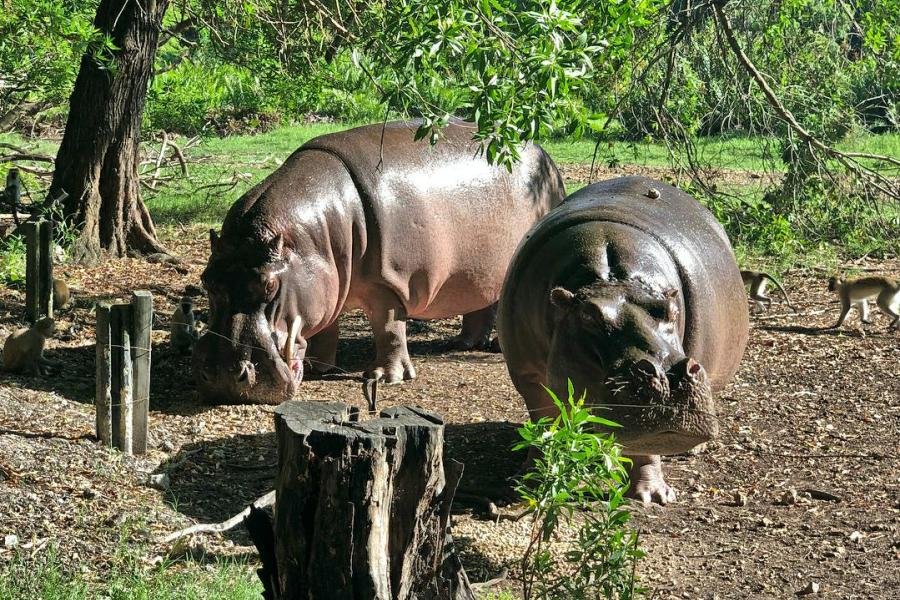
As work on the new park progressed, plans were made to create fishponds, but immediately problems occurred. For some reason, the fish weren’t surviving, but Haller recalled a piece of African folklore he decided to follow. It was said that if hippos were removed from certain ponds, the fish died. It seems that the hippos’ waste matter fed plankton in the water, supplying food for the fish. Further, the hippos’ activity aerated the water, also benefiting the aquatic life. Acting on these traditional stories, Dr. Haller located two hippos, Sally, a boisterous young female raised by friends, and Potty, who was abandoned by a traveling zoo. The hippos were resettled in the park, became instant friends and are now inseparable. And the fish, as foretold, have also thrived.


Awards and Recognition
The Park was honored with the United Nations Environmental Program – Global 500 Roll of Honour award for the successful rehabilitation of this eco-system.
About Haller Park
Mombasa has a tropical climate with more rainfall in the winter months. March is usually the warmest month with an average temperature of 29oC/82oF. Location: 12km (7.5 mi) north of the Kenyan coastal city of Mombasa. Operating Hours: The Park is open from 08:00 hrs. to 17:00 hrs. daily, including weekends and holidays.
Where to Stay
Mombasa offers a range of accommodations, from budget-friendly options like the Mombasa Backpackers to luxury resorts like the Sarova Whitesands Beach Resort. Book a stay that suits your needs and explore the city’s coastal charm.

Things to Do and See
Sally and Potty, the famous hippo couple is still entertaining the park’s visitors. Watch them being fed daily at the Game Sanctuary at 4:00 pm Crocodiles, this fascinating species was brought to the park in 1975 and has successfully reproduced since the 1980s. Waste from the fishponds is used to feed the crocodiles. Night Walks, these evening sojourns will entertain you with sightings of bushbabies, owls, fireflies, and genets. Observation Platform, you can view the giraffe close-up and even feed them with pellets handed out by the guides. Birdlife – The park is a bird lover’s paradise. Look for kingfishers, storks, herons, egrets, owls, eagles, cranes, sandpipers and much more.
Discover Haller Park Sanctuary
If this lush park were in a naturally occurring setting, it would have been impressive on its own. But having transformed a previous ecological eyesore into such a bountiful retreat is a testament to Dr. Haller and the many others who helped make this sanctuary such a wonderful place to visit.