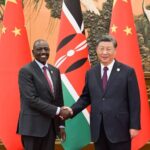
Kenya’s President William Ruto and Tanzania’s President Samia Suluhu Hassan signed eight bilateral agreements in Dar es Salaam this week, though the visit was overshadowed by public disagreements regarding regional infrastructure and internal security. The high-stakes meeting aimed to eliminate non-tariff barriers by June 30, 2026, yet concluded with rare diplomatic corrections that highlighted growing pains within the East African Community.
The primary tension surfaced during a joint briefing when President Ruto announced a trilateral plan involving Uganda to construct a massive regional oil refinery in Tanga. President Suluhu immediately distanced her administration from the claim, stating she had no knowledge of such an investment and emphasizing that Tanzania had not been consulted. This unexpected rebuttal forced Ruto to address the “audacious proclamations” during his subsequent speech to the Tanzanian Parliament in Dodoma on May 5.
Security rhetoric also took a controversial turn when the two leaders discussed regional stability. President Suluhu urged a hardline approach to anti-government protests, suggesting that dissenters should be handled with physical force. “We must protect our sovereignty from those who use the guise of democracy to create chaos,” Suluhu stated. “If children are unruly, they must be corrected so the nation can progress.” Ruto, facing ongoing pressure from youth-led movements in Kenya, remained notably reserved during these specific remarks.
Despite the friction, the signed Memoranda of Understanding cover critical sectors including agriculture, energy, and judicial cooperation. Both nations reaffirmed their commitment to the Voi-Mwatate-Taveta railway and the Malindi-Bagamoyo Super Highway. These projects are designed to streamline the movement of goods and people, potentially boosting trade volumes between the two largest economies in East Africa.
Political analyst Dr. Aris Kileo noted that the public nature of the corrections was highly unusual for the region. “The transparency of these disagreements suggests a shift in Tanzanian diplomacy toward a more assertive stance,” Kileo observed. “While the trade deals are solid, the lack of coordination on major announcements reveals a significant communication gap that must be bridged for true integration.”
The visit concluded with Ruto becoming only the second Kenyan head of state to address the Tanzanian Parliament. He admitted that mutual mistrust remains the primary obstacle to regional unity. Both leaders now face the challenge of implementing the trade deals while reconciling their diverging views on regional infrastructure and civil liberties.